


Silencing the Messenger: Kebbi State’s War on Truth and the Erosion of Nigeria’s Democracy

By LaBode Obanor
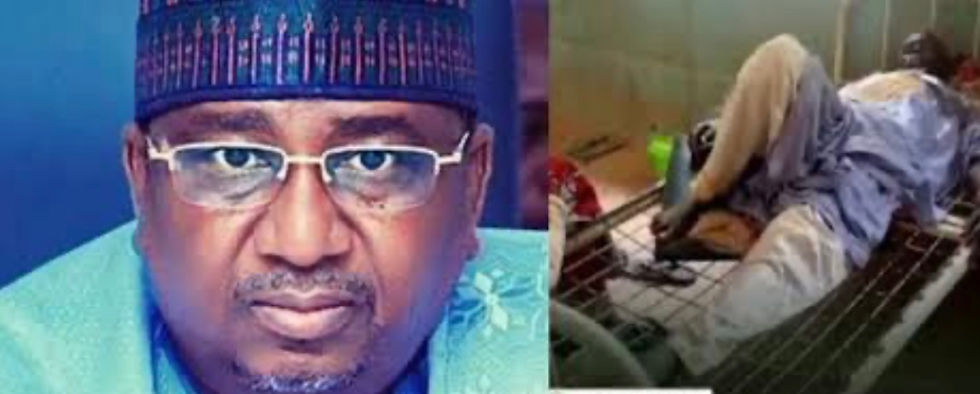
In Kebbi State, a journalist’s camera has done what years of government budgets and hollow promises could not. It laid bare the rot of Nigeria’s healthcare system. The footage released by Hassan Mai-Waya Kangiwa from Kangiwa General Hospital showed patients sprawled on bare metal frames, denied even the dignity of a mattress. It was an image so stark, so unadorned in its truth, that only a mindless person would not gasp at the sight of the video.
No sooner than the video was made public, the state’s response was swift, not in repairing the hospital beds or addressing the systemic neglect, but wait for it, in arresting the man who dared expose it.
Reports indicate that Governor Nasiru Idris ordered Kangiwa’s detention, a move that strips away any pretense of democratic governance and replaces it with the iron hand of tyranny.
With such highhandedness, Governor Nasiru has shown the people of Kebbi and the entire country that it is about power and who wields it, and how it is abused. Instead of confronting their own failures, the government of Kebbi, from top to bottom, has chosen to criminalize truth-telling. In doing so, they send a chilling message and reinforce the narrative that the government’s reputation, whether state or federal, is more sacred than its citizens’ health, and any journalist who suggests otherwise risks imprisonment.
We must be clear and make it known to the powers that be that Nigeria’s democracy, fragile as it is, depends on voices like Kangiwa’s. Journalists are not enemies of the state; they are the sentinels of public trust. By documenting the failures of governance, these patriotic citizens perform a civic service as vital as any legislator or judge. To arrest a journalist for exposing neglect in a public hospital is to assault not only freedom of the press but the constitutional promise that government exists to serve the people.
The greater scandal here is not Kangiwa's video, but in the hospital itself. The healthcare sector in Nigeria has been severely impacted by decades of corruption and poor management, resulting in a desperate situation. It is no surprise that the government officials responsible for improving healthcare are seeking treatment in European hospitals when they fall ill, using the same public funds meant for local healthcare facilities and leaving patients across the country to endure empty pharmacies, absent doctors, and crumbling infrastructure. At the same time, billions are siphoned into the pockets of politicians and their cronies. To penalize a journalist for shedding light on this deterioration is to align the state with impunity, betraying the very citizens it purports to serve.
But history teaches us that repression has a paradoxical effect: it amplifies the very truth it seeks to bury. And Kangiwa’s arrest has only magnified his video’s reach and sharpened public awareness of Kebbi’s failures. The authorities may detain the messenger, but they cannot erase the message.
If Kebbi’s leaders were wise, they would order immediate reforms to the healthcare system, release Kangiwa unconditionally, and begin the slow work of rebuilding public trust. But if they persist in this ruinous path of repression, they will risk more than international condemnation; this time, they’ll deal another blow to the battered body of the country’s democratic order.
Nigeria stands at a crossroads where each act of state repression chips away at the scaffolding of democracy. Kangiwa’s case is not an isolated incident but a part of a wider pattern where journalists, activists, and ordinary citizens are punished for speaking truth to power. A democracy that imprisons its conscience-bearers is a democracy in name only. Kebbi’s rulers must be reminded that silencing dissent does not heal the sick, and detaining journalists will not erase the truth. The only path to legitimacy lies in accountability, transparency, and respect for the people’s right to know. Anything less is tyranny disguised as democracy.
Comments